

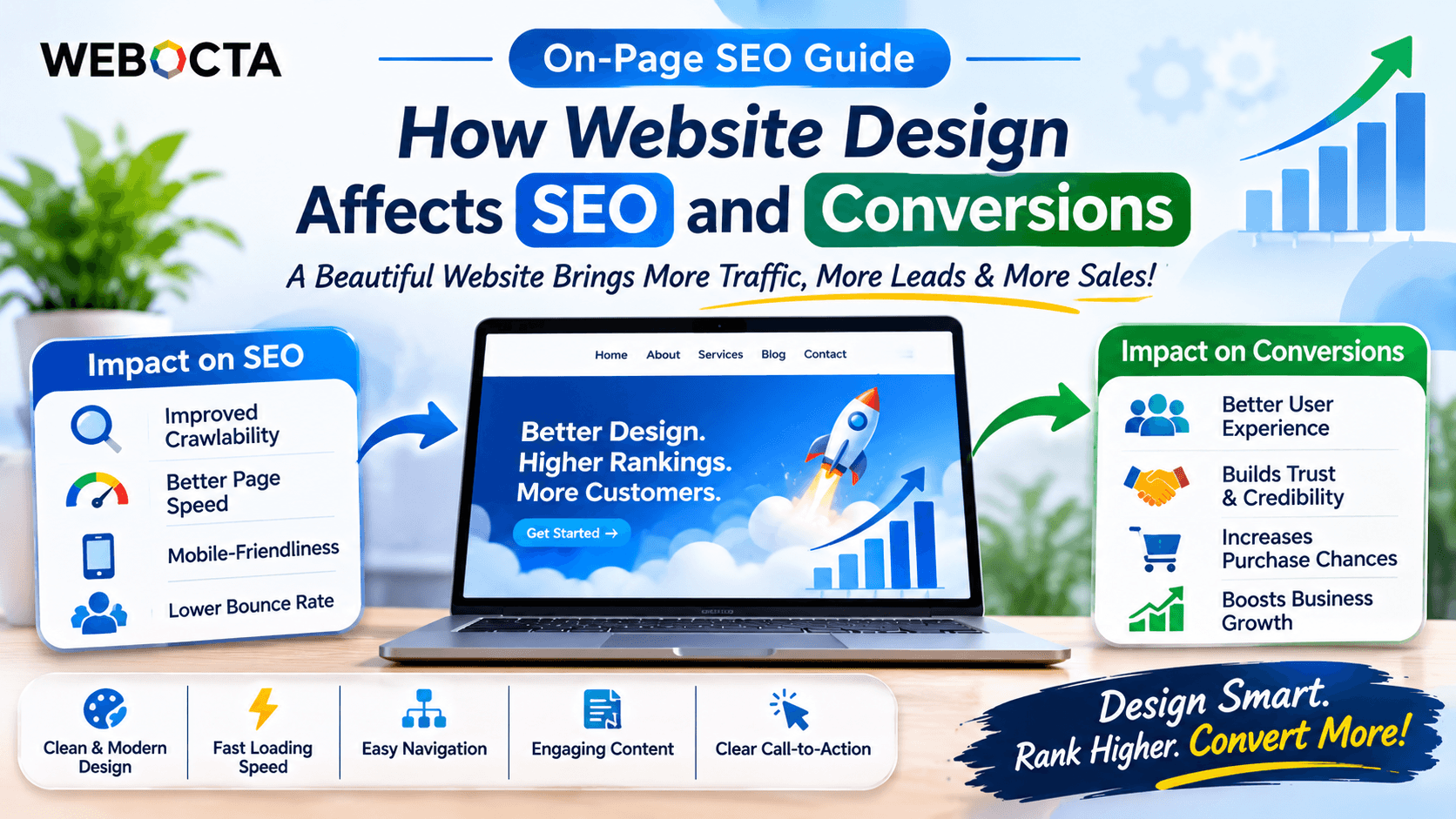
A website is more than just an online presence for your business. It is an important tool for attracting visitors, building trust, generating leads, and increasing sales. However, having an attractive website alone is not enough. Your website design also plays an important role in search engine optimization (SEO) and conversion rates.
A well-designed website provides a smooth user experience, helps visitors find information quickly, and makes it easier for search engines to understand your content. In this blog, we will explore how website design affects SEO and conversions and why businesses should invest in a user-friendly website.
What Is the Connection Between Website Design, SEO, and Conversions?
Website design refers to the visual appearance, layout, structure, and functionality of a website. SEO focuses on improving your website’s visibility in search engine results, while conversion optimization aims to encourage visitors to take meaningful actions.
These three elements work together.
For example, a website with clear navigation, fast loading speed, mobile-friendly layouts, and helpful content can provide a better experience for visitors. This can support SEO efforts and make it easier for potential customers to contact your business, request a quote, or purchase a product.
1. Website Loading Speed Improves User Experience
Website speed is an important factor in creating a positive browsing experience. Visitors may leave if a website takes too long to load, especially when accessing it through mobile devices or slower internet connections.
Page experience and Core Web Vitals are important considerations for modern website performance.
To improve website speed:
- Compress and optimize images.
- Use efficient website hosting.
- Minimize unnecessary scripts and plugins.
- Enable browser caching where appropriate.
- Optimize CSS and JavaScript files.
- Use a content delivery network when beneficial.
A faster website helps visitors access information more easily and can support better engagement and conversions.
2. Mobile-Friendly Design Is Essential
Many people browse websites using smartphones and tablets. Therefore, your website should work smoothly across different screen sizes.
A responsive website automatically adjusts its layout according to the device being used.
Important mobile-friendly design practices include:
- Use responsive layouts.
- Make text easy to read.
- Keep navigation simple.
- Use appropriately sized buttons.
- Avoid unnecessary pop-ups.
- Ensure images fit mobile screens.
Google primarily uses the mobile version of website content for indexing, making mobile usability an important part of an effective SEO strategy.
3. Easy Navigation Helps Visitors Find Information
Website navigation directly affects how visitors explore your website. If users cannot find important information quickly, they may leave without taking action.
Create a simple navigation structure with clearly labeled sections such as Home, About Us, Services, Blog, and Contact Us.
Use descriptive menu labels and organize related pages logically.
For example, a digital marketing company can organize its services into SEO, social media marketing, website development, PPC advertising, and content marketing.
Good navigation improves usability and helps search engines discover important pages through internal links.
4. Attractive Design Builds Trust and Credibility
First impressions matter when visitors land on your website. A clean, professional, and consistent design can help establish trust in your business.
Use a consistent color scheme, readable typography, professional images, and clear layouts.
Include important trust-building elements such as:
- Customer testimonials
- Client reviews
- Business information
- Case studies
- Certifications and achievements
- Contact details
A trustworthy website can make potential customers more comfortable interacting with your business.
5. High-Quality Content Supports SEO
Website design and content should work together. Even the most attractive website may struggle to engage visitors if it does not provide useful information.
Create informative content that answers your audience’s questions and explains your products or services clearly.
Use relevant keywords naturally in page titles, headings, descriptions, URLs, and body content.
Organize information using short paragraphs, bullet points, and descriptive headings. This improves readability and helps visitors understand your offerings.

6. Clear Call-to-Action Buttons Increase Conversions
A call-to-action (CTA) encourages visitors to take the next step.
Examples include:
- Contact Us
- Get a Free Quote
- Book a Consultation
- Request a Demo
- Buy Now
- Learn More
Place CTAs in visible and relevant sections of your website. Use clear, action-oriented language and make buttons easy to identify.
Avoid overwhelming visitors with too many competing calls to action. Focus on the primary action you want them to complete.
7. SEO-Friendly Website Structure Improves Discoverability
A well-organized website makes it easier for search engines to crawl and understand your pages.
Important website structure practices include:
- Create a logical page hierarchy.
- Use descriptive URLs.
- Implement internal linking.
- Add XML sitemaps.
- Fix broken links.
- Use appropriate heading tags.
- Implement relevant structured data.
A strong website structure supports better content discovery and helps users navigate between related pages.
8. Image Optimization Improves Performance
Images make websites visually appealing and help explain products and services. However, large image files can slow down page loading.
Optimize images by compressing files, choosing appropriate formats such as WebP, and using suitable image dimensions.
Add descriptive alt text to meaningful images so that their content can be understood by assistive technologies and search engines.
Avoid using unnecessarily large images that affect website performance.
9. Simple Forms Generate More Leads
Contact forms are essential for businesses that want to generate enquiries through their websites.
However, complicated forms can discourage visitors from completing them.
Keep forms simple by requesting only necessary information, such as name, email address, phone number, and enquiry details.
Use clear labels, helpful error messages, and a visible submit button.
A simple and accessible form can make it easier for potential customers to connect with your business.
10. Monitor Website Performance and Improve Regularly
Website optimization should be an ongoing process. Regularly monitor how visitors interact with your website and identify areas that need improvement.
Useful tools include Google Analytics 4, Google Search Console, and PageSpeed Insights.
Track important metrics such as:
- Organic website traffic
- Search impressions and clicks
- Page loading performance
- User engagement
- Enquiry submissions
- Conversion rates
Use this information to improve website design, content, navigation, and calls to action.
Conclusion
Website design has a significant impact on how visitors experience your business online. A fast, responsive, attractive, and easy-to-navigate website can support SEO efforts while helping convert visitors into potential customers.
From mobile-friendly layouts and optimized images to clear navigation and effective call-to-action buttons, every design element contributes to the overall website experience.
Remember, a successful website is not just about looking good. It should also perform well, rank effectively, and generate business results.
Investing in professional website design and SEO optimization can help your business improve online visibility, attract relevant visitors, build credibility, and achieve long-term digital growth.