

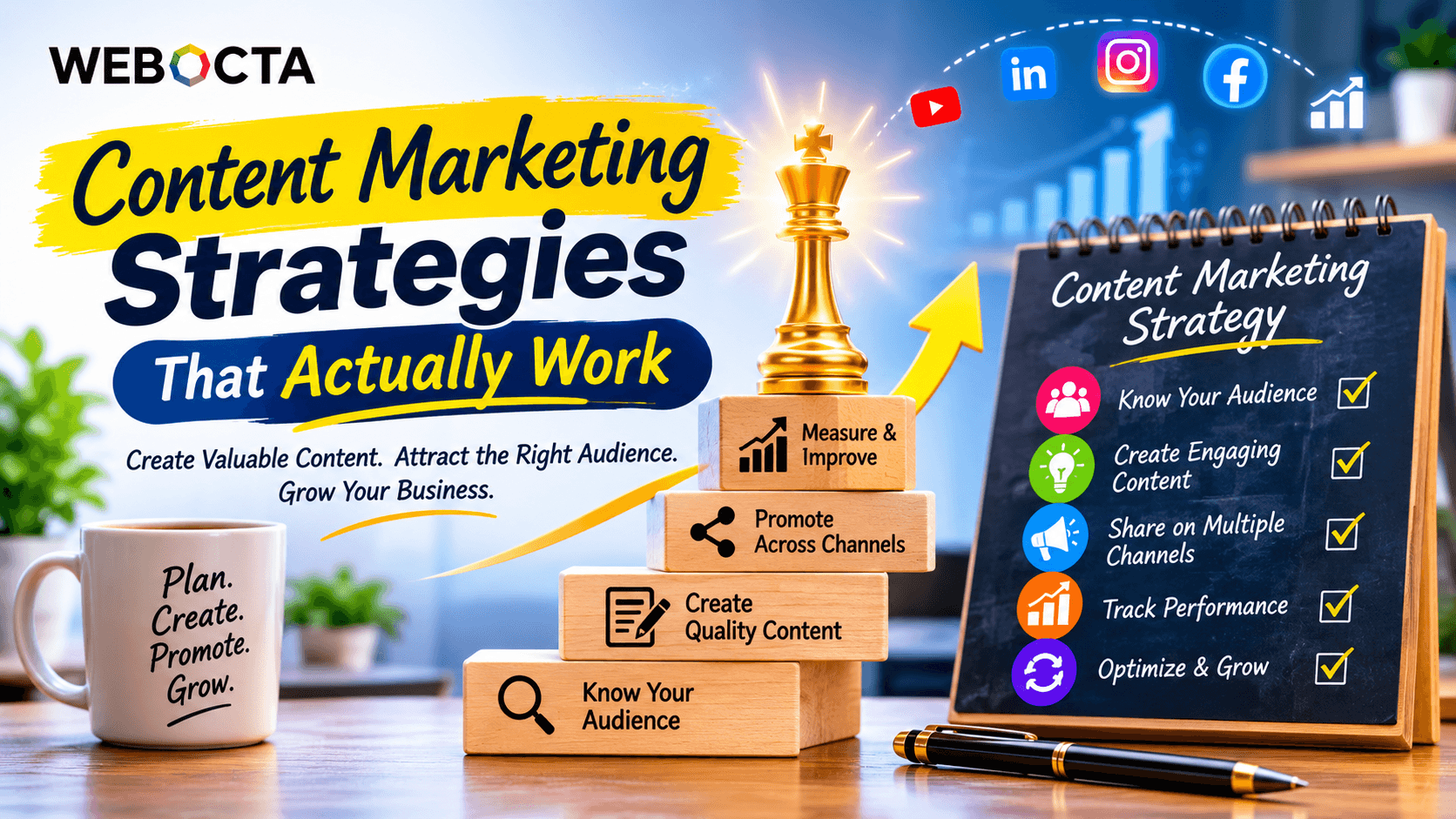
Content marketing has become one of the most effective ways for businesses to attract potential customers, build brand awareness, and generate quality leads. In today’s competitive digital world, simply publishing content is not enough. Businesses need a well-planned content marketing strategy that delivers valuable information to the right audience at the right time.
Whether you run a small business, startup, or established company, the right content marketing approach can help you build trust, improve online visibility, and achieve long-term growth.
Let’s explore some effective content marketing strategies that actually work.
What Is Content Marketing?
Content marketing is a webocta.com/” target=”_blank”>digital marketing approach that involves creating and sharing valuable, relevant, and consistent content to attract and engage a clearly defined audience.
Instead of directly promoting products or services, content marketing focuses on educating, informing, and helping potential customers.
Common content marketing formats include:
Blog posts and articles
Social media posts
Videos and reels
Infographics
Email newsletters
Case studies and success stories
E-books and guides
A successful content marketing strategy focuses on providing value while naturally guiding potential customers toward your business.
1. Understand Your Target Audience
The first step toward successful content marketing is understanding your audience. Before creating content, identify who your potential customers are, what problems they face, and what information they are searching for online.
Research their interests, preferences, challenges, and online behavior.
For example, if your target audience consists of small business owners, you can create content about SEO, lead generation, website development, and social media marketing.
When you understand your audience, you can create content that connects with their needs and encourages engagement.
2. Create High-Quality and Valuable Content
Quality matters more than quantity in content marketing. Publishing multiple articles without providing useful information will not necessarily help your business grow.
Focus on creating original, informative, and engaging content that solves real problems.
Some effective content ideas include:
Step-by-step educational guides
Industry tips and insights
Frequently asked questions
Product and service comparisons
Customer success stories
Practical tutorials
Make your content easy to read by using short paragraphs, clear headings, relevant images, and practical examples.
3. Focus on SEO-Friendly Content
Search Engine Optimization (SEO) plays an important role in content marketing. SEO helps your content become more discoverable when people search for relevant information on Google and other search platforms.
Start with proper keyword research to identify the search terms your audience uses.
Important SEO practices include:
Using relevant primary and secondary keywords
Writing attractive SEO title tags
Creating compelling meta descriptions
Using proper H1, H2, and H3 headings
Adding relevant internal links
Optimizing images with descriptive alt text
Creating helpful, search-intent-focused content
Remember that keywords should be included naturally. Your primary goal should be to answer users’ questions rather than simply repeat search terms.
4. Use Social Media to Promote Your Content
Creating valuable content is only half the job. You also need to distribute it through channels where your audience spends time.
Social media platforms such as Facebook, Instagram, LinkedIn, and YouTube can help increase content visibility and encourage audience interaction.
For example, you can turn a detailed blog post into multiple social media posts, short videos, infographics, or carousel posts.
Maintain a consistent posting schedule and encourage people to comment, share, and interact with your content.
5. Invest in Video Marketing
Video marketing is an effective way to communicate information in an engaging and easy-to-understand format.
Many customers prefer watching videos to learn about products, services, and business solutions.
You can create:
Product demonstration videos
Educational tutorials
Customer testimonials
Behind-the-scenes videos
Short-form educational reels
Industry tips and expert interviews
Videos can be shared across your website, YouTube channel, and social media platforms to reach different audiences.

6. Build an Effective Email Marketing Strategy
Email marketing helps businesses maintain relationships with existing customers and nurture potential leads.
Build an email subscriber list by offering valuable resources such as free guides, newsletters, or useful industry updates.
Send personalized emails containing educational content, company updates, special offers, and helpful resources.
Avoid sending too many promotional emails. Focus on delivering relevant information that encourages subscribers to stay connected with your brand.
7. Use Content Repurposing
Creating fresh content regularly can require significant time and effort. Content repurposing allows you to get more value from the content you already have.
For example, one detailed blog post can be transformed into:
Five social media posts
One infographic
Two short videos
One email newsletter
One LinkedIn article
This approach helps maintain consistency across multiple marketing channels while reaching audiences with different content preferences.
8. Collaborate With Industry Experts
Collaborating with industry experts, influencers, and relevant businesses can help expand your brand’s reach.
Consider publishing expert interviews, guest articles, collaborative videos, and industry discussions.
These partnerships can introduce your business to new audiences, strengthen credibility, and create opportunities for valuable industry connections.
Choose collaborators whose audiences and expertise are relevant to your business.
9. Use Data and Analytics to Improve Performance
A successful content marketing strategy should be measured regularly.
Use tools such as Google Analytics 4 and Google Search Console to understand how your content performs.
Important metrics to monitor include:
Website traffic
Organic search clicks and impressions
Keyword performance
Engagement and conversions
Email open and click rates
Leads generated through content
Analyze the results to identify successful content formats and topics. Use these insights to improve your future content strategy.
10. Maintain Consistency and Update Old Content
Content marketing requires patience and consistency. Publishing one or two articles is unlikely to deliver sustainable results.
Create a realistic content calendar and publish valuable content regularly.
Also, review older blog posts to update outdated information, improve readability, add relevant keywords, and include useful internal links.
Keeping content accurate and relevant helps maintain its usefulness for readers.
Conclusion
Content marketing is more than creating blog posts or publishing social media updates. It is about building meaningful relationships with your audience through valuable, relevant, and engaging information.
By understanding your audience, creating high-quality content, implementing SEO, promoting content across multiple channels, and tracking performance, your business can develop a stronger online presence.
The best content marketing strategy focuses on delivering real value before asking for a sale.
Start implementing these strategies today to improve brand awareness, attract the right audience, generate quality leads, and support long-term business growth.